Multi-District Litigations (MDLs), once considered a relatively rare tool for coordinating related cases in Federal litigation, have become the dominant vehicle for managing large volumes of product liability and toxic tort claims. For defendants, this shift brings immense pressure: thousands of claims, across dozens of jurisdictions, moving at different paces. Managing these cases effectively is no longer just about strong legal arguments — it is about data.
The Data Challenge in MDLs
Every MDL generates mountains of information. Complaints, docket filings, plaintiff fact sheets (PFS), discovery responses, and medical records arrive in inconsistent formats: scanned PDFs, Excel spreadsheets, or through eDiscovery platforms. Even when data is available, it is rarely standardized.
Consider something as simple as documenting an injury. One plaintiff may list “general cancer,” while another specifies “bladder cancer.” Dates may appear as “1997,” “3/15/97,” or “late 90s.” Duplicate or revised PFS submissions complicate matters further, as does the fact that plaintiffs sometimes assert multiple injuries before they are verified.
Unless this information is validated and standardized, it is nearly impossible to draw reliable insights. That, in turn, hinders motion practice, bellwether selection, and settlement strategy.
Turning Data Into Strategy
Once standardized, litigation data becomes a strategic asset. Structured data can be leveraged for triage, reporting, and motion drafting. More advanced approaches use dashboards to bring that data to life. KCIC has been utilizing data analytics and visualizations for our clients for over a decade.
In the example below, consider a scenario where a new neuro-enhancement drug is alleged to cause serious cardiovascular side effects. As claims mount nationwide, defendants must quickly assess the scope and credibility of those filings. A dashboard can distill this raw information into a clear view of injuries, jurisdictions, and plaintiff counsels, transforming overwhelming data into usable insights.
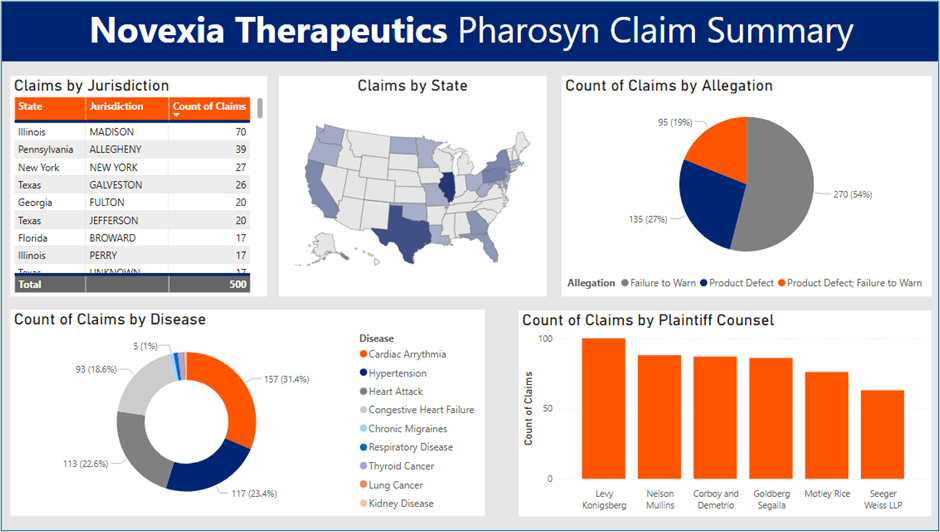
Dashboards allow counsel to slice the data in real time, allowing them to filter by injury type, jurisdiction, or allegation. Geographic heat maps can show concentrations of claims in particular venues. Targeted reports can flag plaintiffs with missing documentation or questionable timelines, helping prioritize Lone Pine motions or settlement discussions.
The result is faster assessments, clearer communication with clients, and better-informed decisions at every stage of litigation.
What the Dashboards Reveal
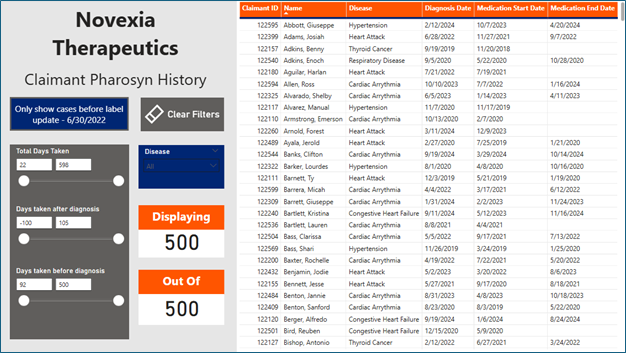
Dashboards become most powerful when they illuminate the details that drive causation and risk assessment. Beyond basic claim summaries, two views are particularly valuable:
This view links plaintiff medication histories with alleged injuries. Counsel can quickly see whether timing makes sense — or whether there are gaps that undermine causation arguments.
The snapshot below distills multiple data points into a view that highlights which cases present higher litigation risk and which appear weak or incomplete. For defendants facing thousands of claims, this kind of triage is critical for deciding where to invest resources, whether for motions practice, settlement discussions, or bellwether selection.
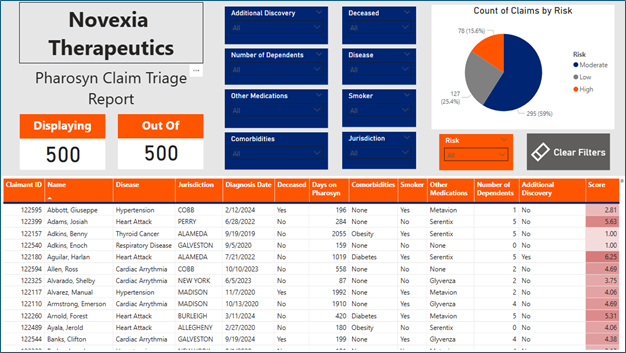
By turning raw data into these kinds of actionable insights, defense teams can move from being overwhelmed by volume to strategically prioritizing the cases that matter most.
Early Resolution: Lone Pine Orders and Rule 16.1
Procedural tools like Lone Pine orders and the soon-to-be-adopted Rule 16.1 give defendants opportunities to press for early case vetting. Lone Pine orders compel plaintiffs to provide evidence of injury, product use, and causation before full discovery; this allows unsupported claims to be eliminated sooner rather than later. Rule 16.1, set to take effect in December 2025, codifies many of the same expectations: early case management, clear factual bases for claims, and standardized direct filings.
In both instances, success depends on data. Courts are far more receptive when defendants can point to structured evidence showing missing information, inconsistent timelines, or unsupported injury allegations. That’s where well-organized litigation data becomes not just useful, but essential.
At KCIC, we have spent years building and deploying robust data systems and visualization tools that help defense teams identify weak claims, streamline discovery, and strengthen arguments for early case resolution. We partner with in-house counsel and outside defense firms to bring a data-first mindset to MDL management — a shift that is no longer optional, but essential for success in today’s mass tort landscape.

Kathrin Hashemi is a litigation management expert who partners with Fortune 500 and mid-market companies to navigate the complexities of mass tort litigation. With a decade of experience, she has focused her practice on helping clients obtain actionable insights from their litigation data. By leveraging advanced technology and deep case expertise, Kathrin enables her clients to manage case filings and resolutions efficiently, optimize insurance recoverability, and streamline litigation processes. She prioritizes listening to her clients, understanding the legal and contextual nuances of their cases, and providing data-driven strategies tailored to their unique needs.
Learn More About Kathrin